
EMDR —
Eye Movement Desensitization and Reprocessing


EMDR — Eye Movement Desensitization and Reprocessing

Eye Movement Desensitization and Reprocessing (EMDR)
We don’t always realize the extent of our emotional wounds. Often, past distress manifests in the present as anxiety, chronic stress, physical tension, or self-sabotaging behaviors. We now know through extensive research that EMDR is an evidence-based, highly effective treatment not just for PTSD, but for a wide spectrum of psychological challenges.
Through EMDR, our brain and body are no longer hijacked by the intrusive feelings, physical sensations, and negative thoughts that disrupt our daily lives. By reprocessing these stuck memories, we can profoundly improve our mental health, advance our careers, and deepen our relationships.
What is EMDR and How Does it Work?
Developed in the late 1980s by Dr. Francine Shapiro, EMDR is a structured psychotherapy that helps individuals heal from the symptoms and emotional distress that are the result of disturbing life experiences.
The therapy is based on the Adaptive Information Processing (AIP) model. Normally, your brain naturally manages and processes new experiences. However, when you experience something highly stressful or traumatic, your brain’s natural coping mechanism can become overwhelmed. The distressing memory gets "locked" in your nervous system, along with the original sights, sounds, thoughts, and bodily feelings.
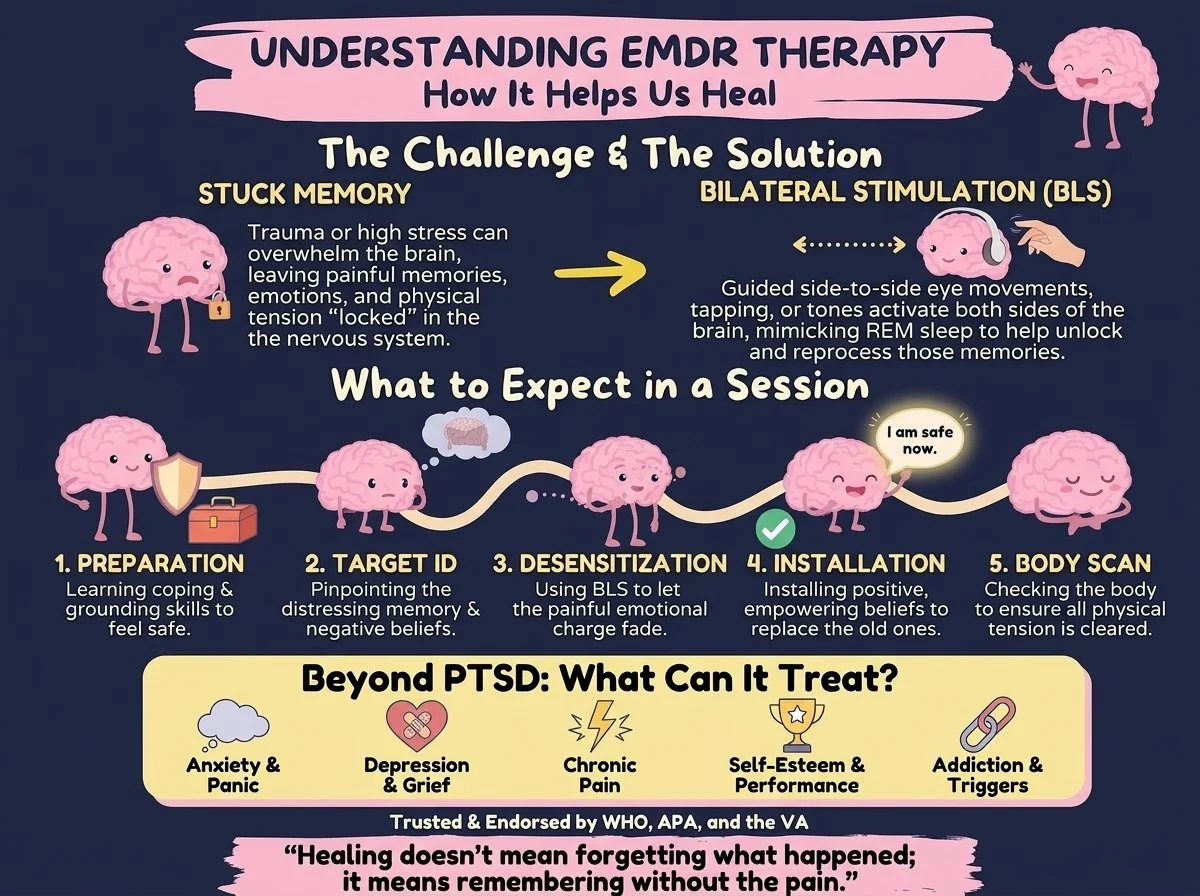
EMDR utilizes Bilateral Stimulation (BLS)—typically through guided side-to-side eye movements, tapping, or audio tones—to activate the opposite sides of the brain. This process mimics the psychological state of REM (Rapid Eye Movement) sleep, allowing the brain to unlock the nervous system and successfully reprocess the memory. The memory is not erased; rather, the emotional charge and physical pain attached to it are neutralized.
What to Expect in an EMDR Session
For many, the idea of facing past trauma is intimidating. One of the greatest benefits of EMDR is that you are not required to speak at length about the distressing event, nor will you be asked to complete out-of-session homework.
The process is highly structured and entirely client-driven. A typical EMDR journey involves:
Preparation and Resourcing: Before any trauma is processed, your therapist will equip you with robust emotional regulation and grounding techniques to ensure you feel safe and stable.
Target Identification: You and your therapist will identify the specific memory, negative core belief, and physical sensation you want to target.
Desensitization: You will hold the memory in your mind while the therapist guides you through sets of bilateral stimulation. Your brain will naturally begin to make new, adaptive associations.
Installation: Once the distress is neutralized, the therapist will help you "install" a positive, empowering belief about yourself to replace the old, negative one.
Body Scan: You will scan your physical body for any residual tension, ensuring the trauma has been fully cleared from your nervous system.
You remain fully awake, alert, and in control throughout the entire process.
Beyond PTSD: What Can EMDR Treat?
While EMDR is widely known as the gold standard for trauma and Post-Traumatic Stress Disorder (PTSD), decades of clinical research have proven its efficacy in treating a variety of conditions, including:
Anxiety, panic attacks, and phobias
Depression and bipolar disorders
Grief and complex loss
Chronic pain and somatic illnesses
Performance anxiety and self-esteem issues
Eating disorders and body dysmorphia
Addiction and substance abuse triggers

Backed by Global Health Organizations
You can have peace of mind knowing that EMDR is heavily researched and widely endorsed by top medical and psychiatric organizations worldwide. It is recognized as an effective form of treatment for trauma and other disturbing experiences by organizations such as:
The World Health Organization (WHO)
The American Psychiatric Association (APA)
The U.S. Department of Veterans Affairs (VA) and Department of Defense
The International Society for Traumatic Stress Studies (ISTSS)
Healing at Zen and Health
At Zen and Health, we are dedicated to helping you move past the invisible barriers that hold you back. We offer Individual EMDR Sessions tailored to your unique history and goals, as well as Group EMDR Interventions, which provide a powerful, community-based approach to nervous system regulation and collective healing.
Healing doesn't mean forgetting what happened; it means remembering without the pain.
Check out this amazing Video about EMDR
EMDR (Eye Movement Desensitization and Reprocessing) is a structured therapy that helps people process and reduce the emotional impact of traumatic memories using guided bilateral stimulation.