
Therapy in Spanish: Finding the Right Bilingual Therapist for Your Healing Journey

¿Alguna vez has intentado describir tu dolor en un idioma que no es el tuyo?
Have you ever tried to describe your pain in a language that isn’t your own?
There’s something that gets lost in the translation. The nuance. The cultural context. The very words that hold the weight of your experience — words that don’t have a perfect equivalent in English, no matter how hard you try.
Words like susto. Or vergüenza. Or aguantar.
If you’ve grown up speaking Spanish at home — if it’s the language of your childhood, your family, your prayers — then you know exactly what I’m talking about. And if you’ve ever sat in a therapist’s office trying to explain yourself in English while your heart was speaking Spanish, you may have left that session feeling more disconnected than when you walked in.
That’s not a failure on your part. It’s a gap in the mental health system.
I’m Maribel Munguia Dugas, LCSW, CIMHP — a bilingual Latina therapist and health coach, and the founder of Zen & Health. Together with our team of therapists, I’ve spent over 20 years watching clients light up the moment they realize they can do therapy in Spanish. That they don’t have to translate themselves. That they can just be.
In this post, I want to talk about why therapy in Spanish matters, what to look for when you’re searching for a Spanish-speaking therapist, and what makes bilingual mental health care so much more than just speaking the same language.
Why Language Is Not Just a Communication Tool — It’s a Healing Tool
When we talk about mental health treatment, we often focus on the modality — cognitive behavioral therapy, EMDR, talk therapy. But we don’t talk nearly enough about the medium through which that healing happens.
Language.
Research consistently shows that people express emotional experiences more vividly and authentically in their first language. A 2014 study published in the journal Cognition found that bilingual individuals process emotional information differently depending on the language they’re using. Their first language carries more emotional weight — more visceral, more immediate, more real.
This has profound implications for therapy.
When a client is forced to describe trauma, grief, anxiety, or family conflict in their second language, they often experience a kind of emotional blunting. The words don’t quite hit the same. The therapy doesn’t go as deep. Progress can stall — not because the therapist isn’t skilled, but because the healing is happening at arm’s length.
Therapy in Spanish removes that distance.
It means you can cry in the language you cry in at home. You can describe your mother’s expectations without having to explain what familia really means. You can talk about your immigration story without being asked to simplify it.
That’s not just more comfortable. It’s more effective.
The Mental Health Crisis in the Latino Community — And Why Bilingual Care Is Urgently Needed
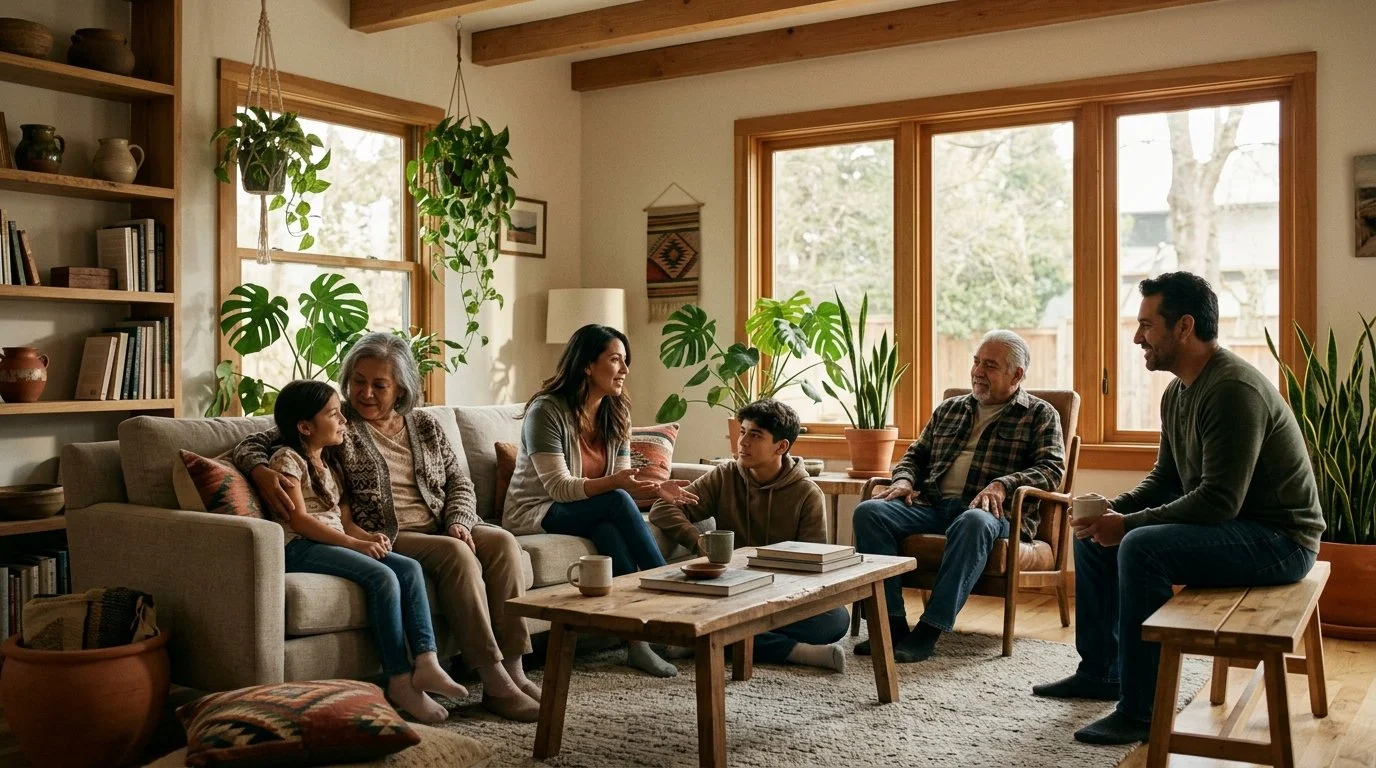
The numbers are stark.
According to the American Psychological Association, Latino adults are significantly less likely to receive mental health treatment than non-Latino white adults — despite facing many of the same (and in some cases, higher) rates of depression, anxiety, PTSD, and other mental health conditions.
Why the gap?
There are many reasons: stigma, cost, lack of insurance, cultural beliefs that mental health struggles should stay within the family. But one of the most significant and consistently documented barriers is language.
The National Alliance on Mental Illness (NAMI) reports that the shortage of bilingual mental health providers is a critical issue across the country. Millions of Spanish-speaking adults and teens cannot access therapy simply because there aren’t enough therapists who speak their language.
In California alone — a state where more than 10 million people speak Spanish at home — the demand for Spanish-speaking mental health providers far outpaces the supply.
If you’ve been searching “therapy in Spanish near me” and coming up empty, that’s why. And it’s why, when you find a truly bilingual therapist, it matters deeply.
What Does “Bilingual Therapy” Actually Mean?
Not all bilingual therapy is equal. And as you search for a Spanish-speaking therapist, it’s worth understanding what you’re really looking for.
True Bilingualism vs. Survival Spanish
Some therapists will list themselves as “bilingual” because they took Spanish in high school or can hold a basic conversation. That’s very different from a therapist who was raised speaking Spanish, who thinks in Spanish, and who can navigate the cultural nuances that make therapy actually land.
When you’re looking for therapy in Spanish, you want someone who:
· Is functionally fluent — able to conduct an entire session in Spanish without switching to English to explain clinical concepts
· Understands the cultural context behind the words — the meaning of family loyalty, respeto, gender roles, immigration grief, religious faith
· Can work with you in whichever language feels right in the moment — sometimes you want to process in Spanish, sometimes in English, and a truly bilingual therapist flows between both naturally.
Cultural Competence Is Not the Same as Being Latino
A Spanish-speaking therapist who isn’t Latino can still provide excellent care. But there is something unique about working with a therapist who has lived experience of the culture.
As a Latina therapist and the daughter of immigrants, I don’t just speak your language — I understand what it means to carry the weight of two worlds. To feel pressure to succeed for your family. To navigate systems that weren’t designed with you in mind. To hold your own mental health needs quietly because hay que ser fuerte (you have to be strong).
That shared cultural ground is something our entire team at Zen & Health is committed to honoring. It accelerates trust. And in therapy, trust is everything.
What to Look For When Searching for a Spanish-Speaking Therapist

So where do you start? Here’s what I recommend looking for:
1. Verify Their Fluency Directly
Don’t just trust a profile that says “Spanish-speaking.” During a consultation call, ask them to tell you about their approach — in Spanish. Within a few minutes, you’ll have a clear sense of whether they’re truly fluent or working from a limited vocabulary.
2. Ask About Their Cultural Background and Training
Questions like:
· Have you worked extensively with Latino or immigrant clients?
· Are you familiar with cultural dynamics like familismo, machismo, or the experience of being undocumented?
· How do you approach faith or spirituality in your work?
The answers will tell you a lot about whether this therapist is the right fit culturally, not just linguistically.
3. Look for Specialized Modalities
Language matters — but so does clinical skill. The best bilingual therapists don’t just translate; they bring evidence-based approaches to their work. Look for therapists trained in modalities like:
· EMDR (Eye Movement Desensitization and Reprocessing) — highly effective for trauma, including immigration trauma, childhood adversity, and complex PTSD. Learn more about EMDR at Zen & Health →
· Accelerated Resolution Therapy (ART) — a rapid, imagery-based trauma therapy that works beautifully for clients who have experienced acute trauma or grief
· CBT and mindfulness-based approaches — practical tools for anxiety, depression, and stress management
4. Check Whether They Offer Telehealth
One of the biggest barriers to accessing therapy in Spanish has historically been geography. If you live in a community without many bilingual providers, telehealth changes everything.
At Zen & Health, our therapists offer telehealth sessions throughout California and Washington state, which means clients in rural areas, in the Bay Area, in San Diego — anywhere in California — can access therapy in Spanish from the comfort of their own home.
5. Ask About Insurance and Sliding Scale
Cost is a real barrier. When you’re searching for a bilingual therapist, ask directly:
· Do you take my insurance?
· Do you offer a sliding scale or reduced fee sessions?
· Can you provide a superbill for out-of-network reimbursement?
At Zen & Health, we work with clients to navigate the financial side of starting therapy. Your healing shouldn’t have to wait because of cost.
Common Mental Health Concerns in the Latino Community — And How Therapy in Spanish Helps
Let’s talk specifically about what you might be carrying — and how bilingual therapy addresses it.
Immigration Grief and Trauma
Whether you immigrated yourself, or you were raised by parents who did, immigration leaves a mark. The loss of community, of familiarity, of language as a source of belonging. The grief of leaving behind abuela, the village, the food, the sounds that made home feel like home.
Immigration trauma is real, clinically recognized, and often undertreated. In bilingual therapy, we can name that grief fully — in Spanish, if that’s where it lives.
Intergenerational Trauma
The pain your grandparents carried doesn’t disappear. Research into epigenetics shows that trauma can be passed down across generations — shaping how we respond to stress, how we attach to others, and how we see ourselves.
Our therapists are trained in EMDR and trauma-focused care, and work with clients to untangle the inherited patterns that are keeping them stuck — the hypervigilance, the people-pleasing, the deep fear of abandonment — often without them even realizing where it came from.
Anxiety and Depression
Latino adults and teens experience high rates of anxiety and depression, often amplified by acculturation stress, discrimination, poverty, and the pressure to perform across two cultures.
Therapy in Spanish creates a space where these struggles can be named without shame and addressed without cultural misunderstanding.
Family and Relationship Issues
Family dynamics in Latino culture are complex and beautiful — and they can also be a significant source of stress. Boundaries that don’t translate across generations. The tension between individual needs and collective family expectations. The silent rules about what you’re allowed to feel.
A bilingual, culturally affirming therapist can hold all of that complexity — and help you find a way through it that honors both your roots and your growth.
Faith and Mental Health
For many Latino clients, faith is not separate from healing — it’s central to it. At Zen & Health, our therapists integrate faith and spirituality into the therapeutic process for clients who want that. We offer Christian counseling and faith-informed approaches that honor the role of God and community in your recovery.
What to Expect From Your First Session of Therapy in Spanish
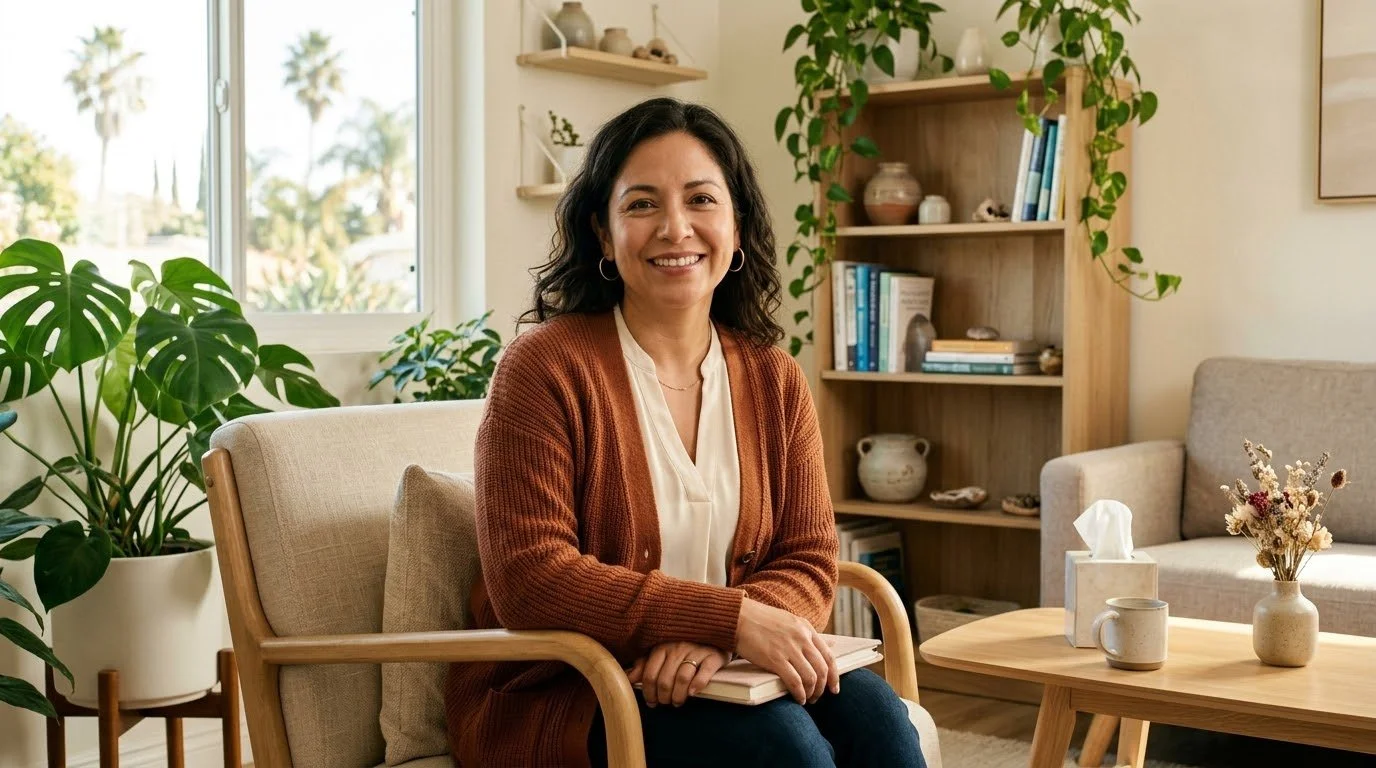
Starting therapy for the first time — or starting over with a new therapist — can feel vulnerable. You might wonder: ¿Y si no tengo las palabras correctas? What if I don’t have the right words?
You do. And in a truly bilingual therapy space, there’s no wrong way to start.
Here’s what your first session at Zen & Health typically looks like:
We start with your story. Not a clinical intake checklist — though we do cover the necessary information. But first, your therapist wants to know you. What brought you here. What you’ve already tried. What you’re hoping for.
We talk about your goals. What does healing look like for you? Better sleep? Less anxiety? Clearer boundaries with family? More peace? We build a roadmap together.
We discuss the approach. Based on what you share, your therapist will explain which therapeutic modalities might be most helpful — whether that’s EMDR, ART, HeartMath biofeedback, health coaching, or a combination. Nothing is imposed. Everything is collaborative.
You leave with next steps. Whether that’s scheduling your next session, a small homework task, or simply a new way of thinking about what you’re carrying — you leave with something concrete.
The session can happen entirely in Spanish, entirely in English, or in the natural mix of both that bilingual people live in every day. Tú decides. You decide.
How Zen & Health Approaches Bilingual Mental Health Care
At Zen & Health, bilingual therapy isn’t a checkbox. It’s at the heart of who we are.
Our founder Maribel Munguia Dugas, LCSW, CIMHP, established this practice because she saw too many Latino clients falling through the cracks of a mental health system that wasn’t built for them. Too many people sitting in offices where the therapist was technically qualified but couldn’t understand the cultural weight of what they were carrying. Our team shares that mission — and that standard.
Here’s what sets our approach apart:
Whole-person care. Our team doesn’t just treat symptoms — we look at your mental health through the lens of your whole life: your sleep, your nutrition, your movement, your relationships, your faith. Mental health doesn’t exist in a vacuum. And healing can’t happen in one either.
Specialized trauma training. Our therapists are trained in EMDR and Accelerated Resolution Therapy (ART) — two of the most effective evidence-based trauma treatments available. For clients carrying immigration trauma, childhood adversity, domestic violence, or generational trauma, these modalities can create profound and lasting change. Explore our trauma therapy services →
A bilingual, bicultural space. Sessions are available in English and Spanish. We understand the cultural context behind your story. We don’t ask you to explain familismo or justify your faith. We meet you where you are.
Telehealth throughout California and Washington. You don’t need to be near Granada Hills to work with us. If you’re anywhere in California or Washington and need therapy in Spanish, we can connect virtually.
Signs It Might Be Time to Start Therapy — En Español o En Inglés
Sometimes we wait too long to ask for help. We tell ourselves we’re fine, that others have it worse, that we should be able to handle it.
Pero mereces apoyo. But you deserve support.
Here are some signs it might be time to reach out:
· You’ve been feeling anxious, sad, or numb for more than a few weeks — and it’s affecting your daily life
· You’re struggling in your relationships — with a partner, your children, your parents — and you don’t know how to break the cycle
· You’ve been through something traumatic and you’re still carrying it in your body — nightmares, flashbacks, physical tension, hypervigilance
· You’re exhausted from performing strength for everyone around you while quietly falling apart inside
· You’ve tried to talk to family or friends but feel like they don’t understand — or that sharing would be a burden to them
· Your physical health is suffering — stress, poor sleep, digestive issues — and you know it’s connected to what’s going on emotionally
· You want more from life than just surviving
Reaching out is not a sign of weakness. It is, as our therapists remind clients every day, one of the most courageous things a person can do.
Frequently Asked Questions About Therapy in Spanish
Is therapy in Spanish available via telehealth?
Yes. At Zen & Health, we offer telehealth therapy in Spanish throughout California and Washington state. You can access bilingual mental health support from your home, your car, wherever you feel safe and private.
Do you work with teens and children in Spanish?
Yes. Our therapists specialize in working with teens and children, and all sessions can be conducted in Spanish, English, or both. Learn more about teen counseling at Zen & Health →
What if my Spanish is rusty or I mix languages?
That’s completely okay. Most bilingual clients naturally code-switch — moving between Spanish and English in the same conversation. That’s not a problem. It’s actually one of the most natural ways to process complex emotions when you live between two languages.
Do you work with undocumented clients?
Yes. Our team works with immigrants and undocumented individuals with deep respect and confidentiality. Therapy is a protected space. Your immigration status is never a barrier to receiving care here.
What modalities do you use for trauma?
Our therapists use EMDR (Eye Movement Desensitization and Reprocessing) and Accelerated Resolution Therapy (ART), both of which are evidence-based, highly effective for trauma, and can be conducted entirely in Spanish.
Do you offer Christian counseling in Spanish?
Yes. For clients whose faith is central to their healing, our therapists integrate Christian counseling and faith-based approaches into the therapeutic process — entirely in Spanish if you prefer.
Meet the Zen & Health Team
At Zen & Health, you’re not just connecting with one therapist — you’re stepping into a practice built around a shared commitment to culturally affirming, whole-person care. Our team is made up of highly trained clinicians, many of whom are bilingual, trauma-specialized, and deeply passionate about serving the Latino community and beyond.
Here’s who you might work with:
Maribel Munguia Dugas, LCSW, CIMHP (Founder — Bilingual: English & Spanish)Maribel brings over 20 years of clinical experience and a uniquely broad skill set: Certified in EMDR, Accelerated Resolution Therapy (ART), BrainPaint Neurofeedback, HeartMath Biofeedback, and Integrative Medicine for Mental Health. She specializes in trauma, women’s health, and whole-person healing that addresses mind, body, and spirit.
Alma Perez, ACSW (Bilingual: English & Spanish)Alma specializes in trauma-focused care using EMDR, ART, HeartMath Biofeedback, and BrainPaint Neurofeedback. She brings warmth and clinical depth to every session, with a particular gift for helping clients process what words alone can’t always reach.
Tilza Castillo, ACSW (Bilingual: English & Spanish)Tilza works with children, teens, and couples using EMDR and BrainPaint Neurofeedback. She creates a safe, nurturing space for younger clients and families navigating difficult seasons together.
Daniela Juarez, ACSW (Bilingual: English & Spanish)Daniela specializes in EMDR and BrainPaint Neurofeedback with a focus on children and teens. She has a natural ability to meet young clients where they are and help them build resilience from the inside out.
Jennifer Martinez, ACSW (Bilingual: English & Spanish)Jennifer works with teenagers using BrainPaint Neurofeedback, supporting adolescents as they navigate the unique challenges — and pressures — of growing up. She understands the teen experience deeply and creates space for authentic connection.
Monica Juarez, ACSW (Bilingual: English & Spanish)Monica specializes in EMDR and BrainPaint Neurofeedback with children, teens, and families. She brings patience, skill, and cultural sensitivity to every session, helping younger clients find healing at their own pace.
Haely Enot, ACSWHaely works with teens and couples, offering thoughtful, relational care that strengthens communication and connection. She is a compassionate presence for clients navigating relationship challenges and the complexities of adolescence.
Carolina Stewart, LCSW (Bilingual: English & Spanish)Carolina is an EMDR-trained licensed therapist with a focused expertise in trauma processing. Her bilingual practice means Spanish-speaking clients can access deep, evidence-based trauma care without language ever being a barrier.
Diana Santillan, ACSW (Bilingual: English & Spanish)Diana specializes in EMDR and teen counseling, supporting adolescents — and the adults who love them — through trauma, anxiety, and the turbulence that can come with growing up in two cultures at once.
Camelia Churchian, ACSWCamelia brings a unique combination of EMDR, teen therapy, and Christian counseling to her work. She is bilingual in ArmenianFor clients whose faith is an anchor in their healing, Camelia offers an integrated approach that honors both clinical best practices and spiritual wellbeing.
No matter which therapist you work with at Zen & Health, you can expect the same foundation: evidence-based care, cultural respect, and a genuine commitment to helping you move from surviving to thriving.
Meet the full team and book a consultation →
Your Healing Deserves to Happen in the Language of Your Heart

You’ve been strong for a long time.
You’ve navigated systems, translated for your family, code-switched your way through schools and jobs and hospitals. You’ve carried your own pain quietly while making sure everyone else was okay.
Ya es tiempo de que alguien te cuide a ti. It’s time for someone to take care of you.
Therapy in Spanish isn’t a luxury. It’s a form of care that respects your whole self — your language, your culture, your history, and your vision for the life you want to live.
At Zen & Health, we are here for that journey. We speak your language — not just linguistically, but culturally, emotionally, spiritually.
Ready to begin your healing journey?
If you’re looking for therapy in Spanish — whether you’re in Granada Hills, anywhere in California, or in Washington state — our team would love to connect with you.
Schedule your free consultation today →
Estamos aquí para ti. We are here for you.
About the Author
Zen & Health is a holistic mental health and wellness practice in Granada Hills, California, founded by Maribel Munguia Dugas, LCSW, CIMHP — a bilingual Latina therapist and health coach with over 20 years of clinical experience. Our team of therapists specializes in trauma, EMDR, integrative medicine, and bilingual therapy for adults, teens, women, couples, and immigrant communities. We offer both in-person and telehealth services in English and Spanish throughout California and Washington state.
